
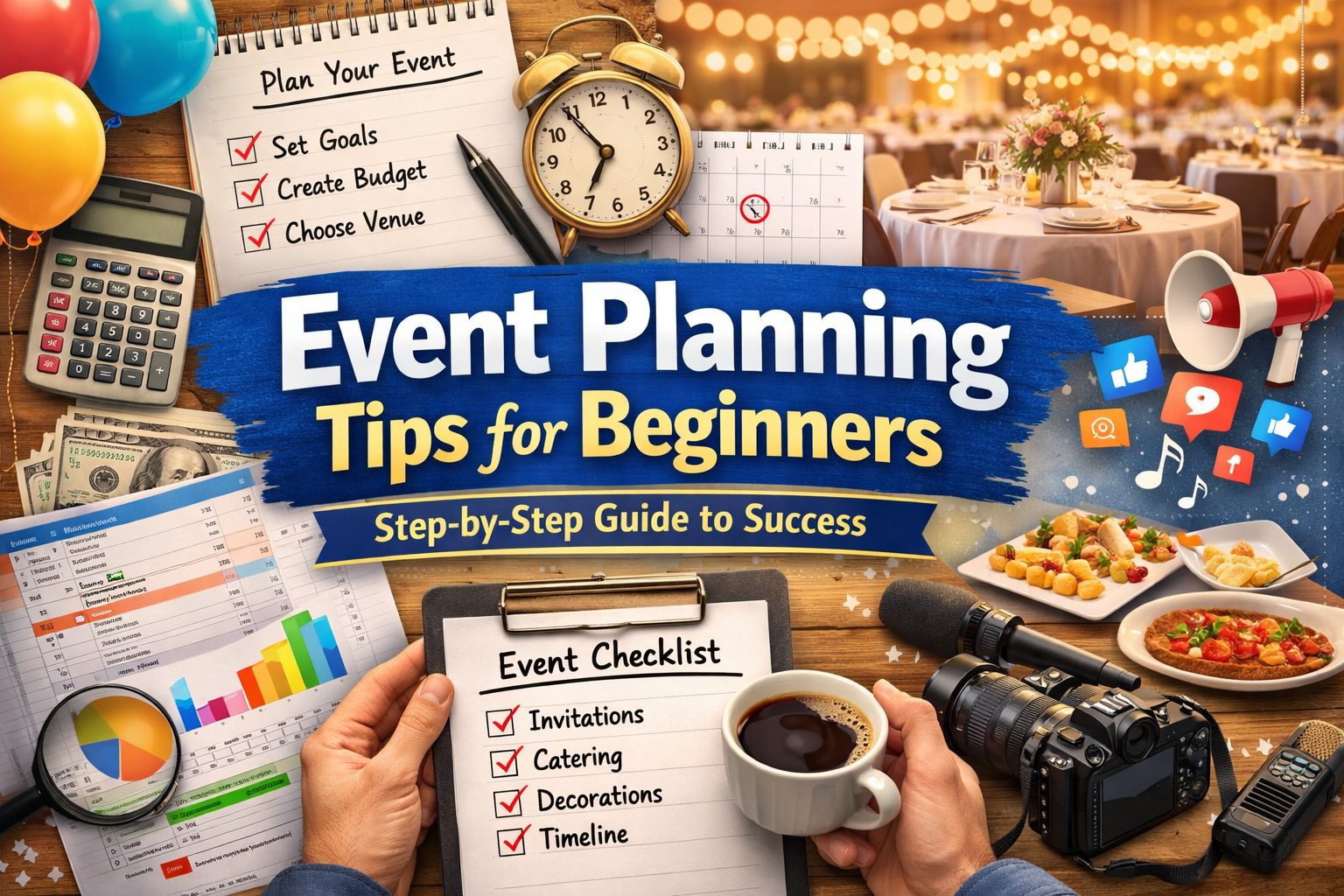
When I was first asked to organize an event, I remember how quickly excitement turned into pressure. What seemed simple at first suddenly became overwhelming—budgets, vendors, guest lists, and timelines all demanding attention at once. If you are feeling this way, trust me, I have been there. That is exactly why I decided to share these event planning tips for beginners—to help you avoid the confusion I faced and plan with confidence.
Over time, I have learned that mastering event planning tips for beginners is not about perfection—it is about preparation, structure, and understanding what truly matters. In this guide, I will walk you through the exact steps I follow whenever I plan an event, whether it is a birthday celebration, corporate gathering, or private experience.
1. Define Your ‘Why’ and Establish Clear Goals
One of the first event planning tips for beginners I always share is this: never start planning without knowing your purpose.
Determine Your Core Objectives
Whenever I plan an event, I ask myself: Why am I doing this? Is it to celebrate, promote, connect, or raise funds? Having clarity here helps me make better decisions. Every time I ignored this step in the past, I ended up wasting money on things that did not matter.
Identify Your Target Audience
Another important part of event planning tips for beginners is understanding your audience. I always think about who is attending—what they like, what they expect, and how I want them to feel. This helps me shape everything from the venue to the entertainment.
2. Master the Budget Early
If there is one lesson I learned the hard way, it is this: budgeting can make or break your event. That is why budgeting is a key part of event planning tips for beginners.
a. List Every Potential Expense
I personally write down every single cost I can think of—venue, food, decorations, logistics, and even small things like printing and souvenirs. This habit has saved me from unexpected surprises many times.
b. Build in a Contingency Fund
One of my golden event planning tips for beginners is always adding extra money for emergencies. I usually keep about 15–20% aside because something will go wrong—and when it does, you will be glad you planned for it.
c. Learn the Art of Negotiation
I never accept the first price. Over time, I have realized that negotiation is one of the most powerful event planning tips for beginners. Vendors are often willing to adjust prices or add extra value if you simply ask.
3. Create a Foolproof Timeline
Time management is everything. Early in my journey, I underestimated this, and it almost ruined an event I planned. Now, I treat timelines as one of the most important event planning tips for beginners.
a. Work Backwards from the Event Date
I always start from the event day and move backwards. This helps me set clear deadlines and stay organized.
b. Utilize Event Planning Tools
I personally use tools like spreadsheets and task managers to stay on track. Trust me, staying organized is one of the smartest event planning tips for beginners you can adopt.
c. Implement Buffer Time
I always add extra time to every task. Delays happen, and this simple strategy has saved me multiple times.
4. Secure the Perfect Venue
Choosing the right venue is something I never take lightly. From my experience, this is one of the most impactful event planning tips for beginners.
a. Consider Location
I always think about accessibility—how easy it is for guests to arrive, park, and navigate the space.
b. Assess Included Amenities
Some venues look cheap until you start adding extra costs. One of my favorite event planning tips for beginners is to always ask what is included upfront.
c. Do Not Forget Accessibility
I make sure every guest feels comfortable. Inclusivity is something I prioritize in every event I plan.
5. Curate an Unforgettable Guest Experience
For me, the guest experience is everything. One of the most practical event planning tips for beginners is focusing on how people feel during your event.
a. Focus on Flow and Layout
I always design the space so movement feels natural. No one likes confusion or overcrowding.
b. Prioritize High-Quality Catering
From my experience, food is what people remember the most. That is why I never compromise here.
c. Engage the Senses
Lighting, music, and ambiance matter more than people think. These small details are powerful event planning tips for beginners that elevate any event.
6. Build and Empower Your Team
I used to think I could do everything myself—until I burned out. Learning to delegate became one of my most valuable event planning tips for beginners.
a. Identify Key Roles
I always assign clear responsibilities to avoid confusion.
b. Hire Reliable Vendors
I take time to vet vendors properly because they represent my event.
c. Treat Your Team Well
Whether paid or volunteer, I always ensure my team feels valued.
7. Develop a Robust Marketing Strategy
Even the best event will fail without proper promotion. That is why marketing is a crucial part of event planning tips for beginners.
a. Leverage Multiple Channels
I promote events using social media, email, and word-of-mouth.
b. Use Social Media Effectively
Creating buzz online has helped me increase attendance significantly.
c. Communicate Clearly with Attendees
I always keep attendees informed before the event. It reduces confusion and improves experience.
8. Master the Day-Of Execution
The event day is where everything comes together. From my experience, preparation is the most important of all event planning tips for beginners.
a. Create a Run of Show
I always have a detailed schedule for the day—it keeps everything organized.
b. Pack an Emergency Kit
This has saved me countless times. Small tools can fix big problems.
c. Assign a Point Person
I never try to handle everything myself anymore. Delegation keeps things running smoothly.

9. The Post-Event Wrap Up
After every event, I take time to reflect. This is one of the most overlooked event planning tips for beginners, but it is very important.
a. Gather Feedback
I always ask attendees what they think. Their feedback helps me improve.
b. Show Appreciation
I make sure to thank everyone involved—it builds long-term relationships.
c. Review and Improve
Every event teaches me something new, and I document those lessons.
Romantic Surprise Ideas to Ignite the Spark Without Leaving the House
Conclusion
If there is one thing I have learned, it is that event planning tips for beginners are not just theories—they are practical steps that make your life easier. Planning an event may feel overwhelming at first, but once you follow a structured approach, it becomes much more manageable.
I have made mistakes, learned lessons, and improved over time—and that is exactly why I shared these event planning tips for beginners with you. Stay organized, stay flexible, and most importantly, enjoy the process.